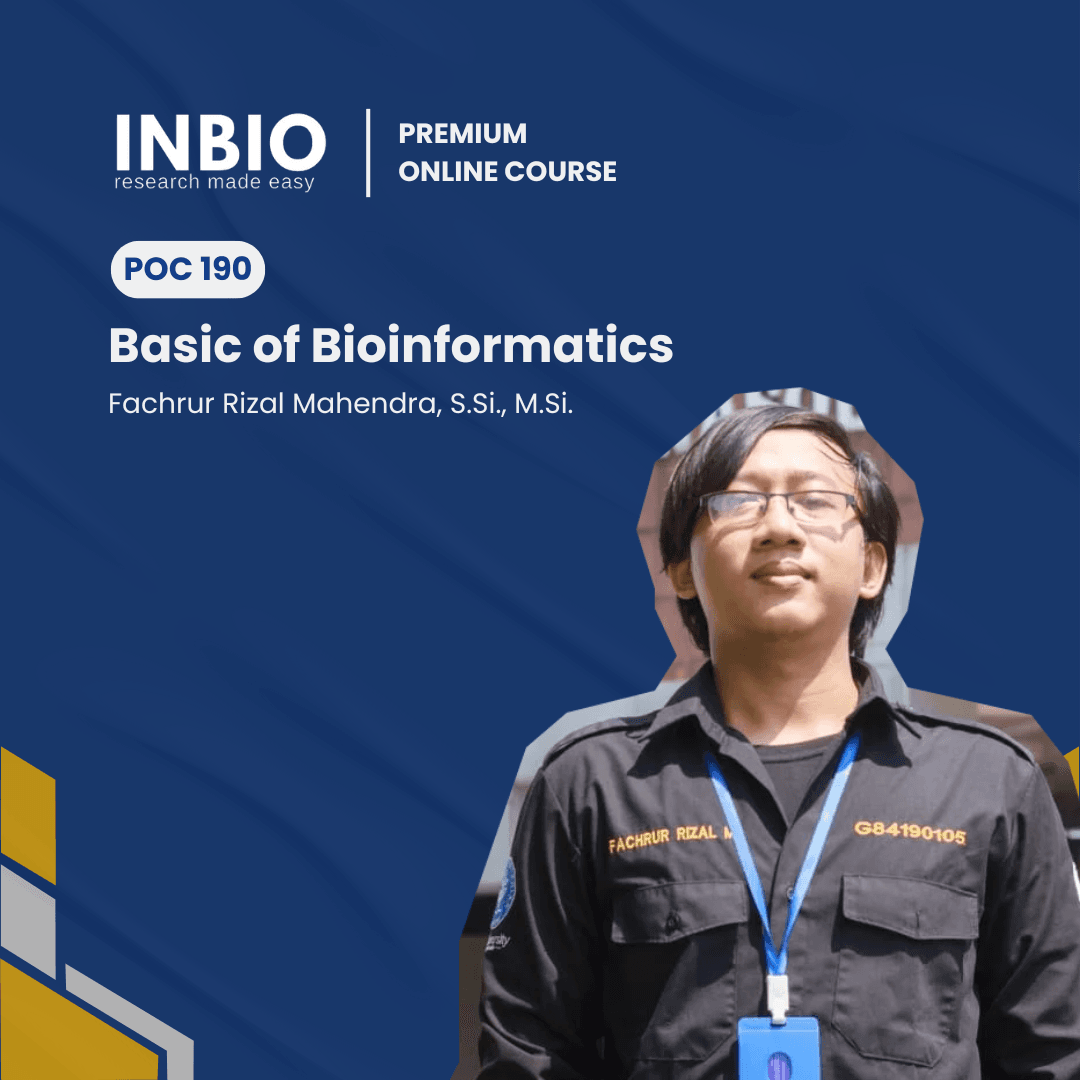
Basic of Bioinformatics
Fachrur Rizal Mahendra, S.Si., M.Si.



Course Overview
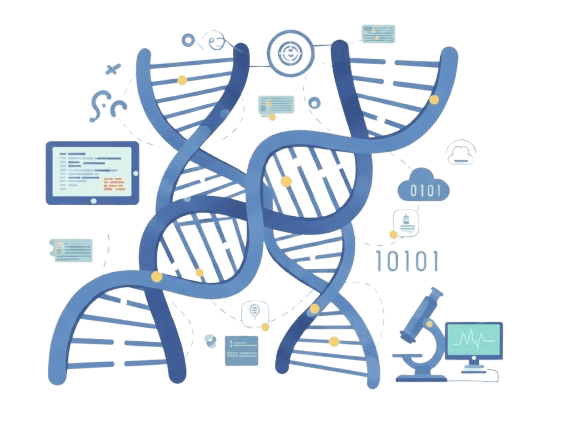
This introductory online course is designed for students and researchers new to the field of bioinformatics. It provides a foundational understanding of how computational tools are used to analyze biological data. Participants will explore the scope of bioinformatics, learn about key biological databases, and understand the different types of data commonly encountered in the field. The course also introduces widely used tools and workflows, including BLAST for sequence alignment, Clustal Omega for multiple sequence alignment, and platforms like Galaxy. Programming tools such as Python and R will be briefly discussed in the context of bioinformatics analysis. A practical hands-on session will guide participants through essential tasks such as retrieving sequences from NCBI, running BLAST searches online, and performing multiple sequence alignments. By the end of the course, learners will be equipped with the basic knowledge and skills to begin exploring bioinformatics independently. No prior experience in programming or bioinformatics is required. This course serves as a stepping stone to more advanced topics in the field. This introductory online course is designed for students and researchers new to the field of bioinformatics. It provides a foundational understanding of how computational tools are used to analyze biological data. Participants will explore the scope of bioinformatics, learn about key biological databases, and understand the different types of data commonly encountered in the field. The course also introduces widely used tools and workflows, including BLAST for sequence alignment, Clustal Omega for multiple sequence alignment, and platforms like Galaxy. Programming tools such as Python and R will be briefly discussed in the context of bioinformatics analysis. A practical hands-on session will guide participants through essential tasks such as retrieving sequences from NCBI, running BLAST searches online, and performing multiple sequence alignments. By the end of the course, learners will be equipped with the basic knowledge and skills to begin exploring bioinformatics independently. No prior experience in programming or bioinformatics is required. This course serves as a stepping stone to more advanced topics in the field.
Sub-topics
- 1.What is Bioinformatics?
- 2.Biological Databases
- 3.Bioinformatics Data Types
- 4.Overview of Common Tools & Workflows (BLAST, Clustal Omega, Galaxy, Python/R)
- 5.Hands-on: Sequence Retrieval from NCBI, Running BLAST Online, Multiple Sequence Alignment (MSA)
Course Components
-